Trending

In late winter a larch looks like a conifer that has given up. The needles are gone, the twigs are bare and grey, and nothing suggests the tree is doing very much at all. Then the shoots produce small crimson buttons and dusty gold nodules, and suddenly the tree is busy. Those are larch cones, male and female, growing on the same tree. Learning to read them turns a bare winter larch from a puzzle into one of the easier identifications in the wood.
That bareness is the first clue. Larch is a deciduous conifer: it sheds its needles in autumn and grows a new set in spring. Most conifers keep their needles, so a larch in winter can look dead or unfinished. The cones, though, keep the story going. They appear on the same short, woody spur shoots that carry the needle tufts, and once you notice them you start to see larches everywhere.
Larch is monoecious, which simply means a single tree carries both male and female cones. The male cones make pollen. The female cones make seed, and they are the ones that swell into the small woody cones you find on the tree, on the ground, and in your coat pocket after a walk.
Two details separate larch from most other conifers in Britain. Larch cones mature in a single growing season, where a Scots pine cone takes two or three years. And the female cone stays on the tree after the seed has gone, sometimes for a couple of years, with the thin central stalk often left on the twig long after the scales have fallen.
The exact timing depends on the species and the weather, but the pattern is reliable enough to use as a rough calendar. In late winter and early spring the buds begin to stir. Male and female cones appear before or just as the new needles break. By summer the female cones have swollen and turned green. By autumn they are woody and brown, and by winter they are opening to release seed.
Male larch cones are small and easy to miss until they are ready. They are often yellow, gold or pale orange, and they look like tiny rounded nodules rather than cones. When the pollen is ripe, a tap on the branch sends a puff of yellow dust into the air. That dust is the pollen, carried by wind to the female cones. Once the male cones have done their job, they shrivel and fall, leaving almost no trace.
Because they are so short-lived, male cones are a spring event. If you want to see them, look in February, March or April, depending on where you are and how cold the winter has been. They are most obvious on a still, dry day when the pollen hangs in the air after a gust.
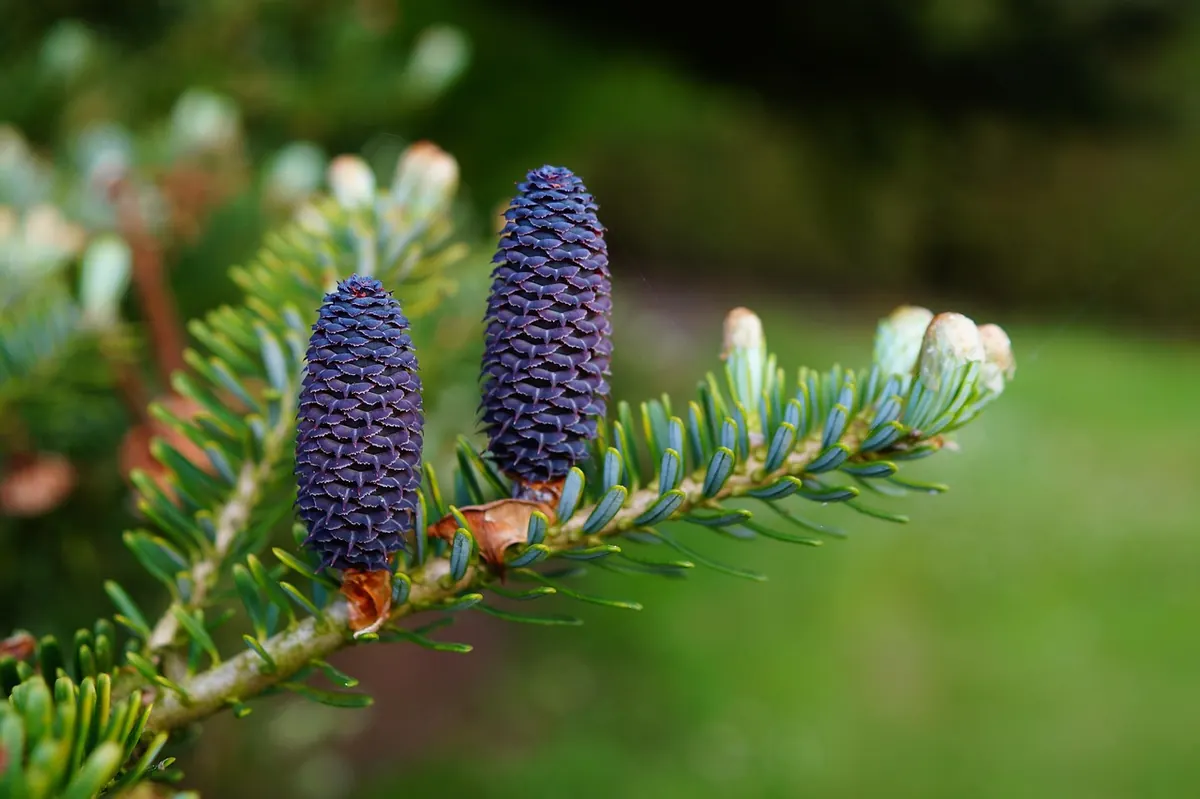
Female cones are the ones that catch the eye. When they first emerge they are often bright crimson, pink or purple, standing upright on the shoot like tiny flowers. Some people call them larch roses. They are not flowers, of course, but the colour is there for a reason: it helps protect the young cone and may help it absorb warmth in cold weather.
That last stage is one of the most useful for identification. A larch twig in winter may still hold old cones, their scales spread apart and their centres empty. Even after the cone itself falls, the short central stalk can remain, a little wooden peg on the spur shoot.
A larch cone is a calendar you can hold: crimson in spring, green in summer, brown in autumn, empty in winter.
If you are standing under a larch in early spring, the difference is usually easy once you know what to look for. Male cones are smaller, more numerous, and often scattered along the shoots. Female cones are larger from the start, fewer, and usually more upright and conspicuous at or near the tips of the short shoots.
It also helps to compare them with other conifers. Scots pine cones are woody and take years to mature. Spruce cones usually hang downwards. Fir cones stand upright but break apart on the tree, leaving a central spike. Larch cones are small, neat and egg-shaped, and they mature in one season. They may be only two to four centimetres long, but they are packed with information.
Britain has three larches you are most likely to meet: European larch, Japanese larch and the hybrid Dunkeld larch. Their cones are similar enough to confuse a beginner, but a few details help.
You do not need to identify the species every time to enjoy the cones. But if you are learning trees, the cone shape, scale pattern and timing are all useful clues. A hand lens helps on a winter walk, especially when the cones are closed or half-broken.
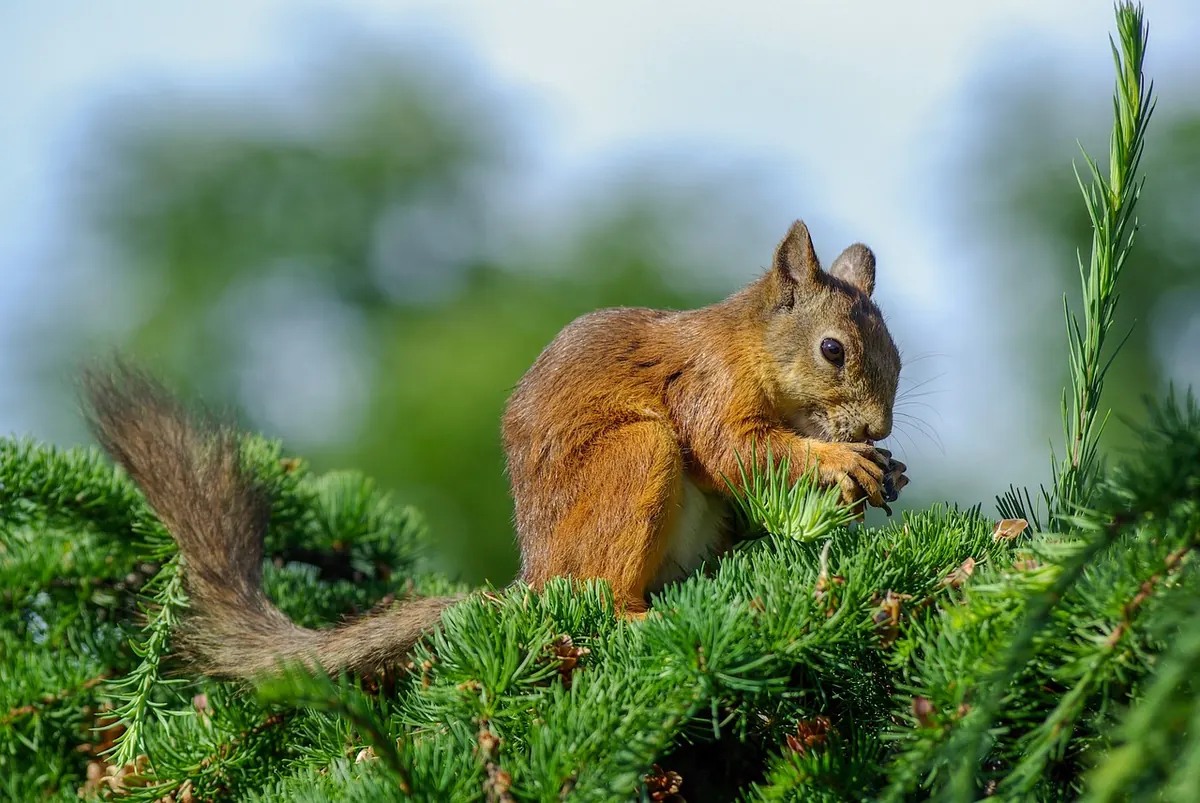
Larch cones are not just a botanical curiosity. They feed wildlife. Red squirrels, siskins and other small birds take the seeds, and insects use the cones and shoots in various ways. The tree itself is valuable in forestry because it grows quickly and its timber is tough and weather-resistant. In gardens and parks, larches are planted for their soft green summer needles and their dramatic golden autumn colour.
For anyone learning to identify trees, larch cones are also a gateway. They teach the difference between male and female cones, between pollen and seed, and between a cone that lasts one season and one that lasts several years. That knowledge carries over to pines, spruces, firs and the rest of the conifers.
The best time to look for male and female cones is late winter to mid-spring. Choose a dry, still day if you want to see pollen. Look at the shoots, not just the branch tips. The cones grow on short spurs, so they can appear close to the twig among the scars where last year's needles were attached.
Once you have seen the two cone types side by side, the larch stops being a bare winter mystery. It becomes a tree with a clear sequence: pollen, seed, cone, husk. The next time you pass one, take a closer look. The smallest cones on the tree are often the ones telling the most useful story.
Photo: 7435465 / Pixabay