Trending


Larch is generous. It grows quickly, shrugs off wind and frost better than most conifers, and gives you something few trees manage: a full turn of autumn colour before bare branches and a fresh start in spring. It is also, for the first two or three years, quietly unforgiving. Most young larches that fail do so because of something decided on planting day — and nearly all of those decisions are easy to get right.
That is the strange thing about larch. Ten years in, it looks indestructible: a straight trunk, a canopy that shrugs off gales, needles that turn butter-yellow in October while everything around them is still green. But the tree that stands through all that was made or broken in a single afternoon, usually a wet one in November, by a spade and a pair of hands. Get the planting right and you can almost forget about it. Get it wrong and you will spend three years watching a tree die slowly while you blame the weather.
Larch are not bog trees. European and Japanese larch both want soil that drains freely, and while they tolerate poor fertility, exposure and cold, standing water in winter rots the fine roots. The damage usually shows up months later, as yellowing needles and dieback that looks like disease but isn't.
A common version of this: a row of larch planted along the bottom of a slope, or at the edge of a field where the ditch never quite runs dry. The first summer they look superb. The second, the leading shoot stops extending and the needles lose their colour. By the third, half the row is dead and the rest is thin and pale — and the owner is convinced the nursery sold them bad stock.
Test the site before you dig. Fill a spade-deep hole with water and leave it. If it drains within an hour or two, you are fine. If it is still full the next morning, you have a problem, and no amount of compost in the planting hole will solve it. Do the test in winter if you can, when the water table is at its highest; a hole that drains briskly in August can sit full from December to March.
On heavy clay, plant on a slight mound or build a raised bed, and improve a wide area rather than a single hole. What you should not do is dig a deep, narrow pit into clay and backfill it with rich compost. That creates a sump: water collects in the loose fill and sits around the roots all winter. Mound planting is not complicated — a barrow-load of soil mixed with grit, spread over a square metre and firmed, so the rootball sits a few inches above the surrounding ground, is usually enough. Roots will find their own way down once they have air to breathe.
If one error accounts for more dead larch than any other, it is burying the root flare. The flare is where the trunk widens into the roots, and it needs to sit at, or a finger's width above, the finished soil level. Bury it and the bark stays permanently damp, the roots are starved of air, and the tree fades over two or three seasons instead of failing outright.
Roots need the same care. A pot-bound larch will keep circling its roots for years if you let it, and bare-root stock can be killed by twenty minutes of drying wind.
That last point is worth repeating. A larch planted a couple of inches too deep rarely dies in its first year. It sulks, grows a little, then declines — which means the mistake is often made all over again, in the same soil, by the same person, on the replacement tree.
Larch are deciduous conifers, and the window for moving them is narrower than for most trees. Bare-root stock should go in while the tree is fully dormant: late autumn once the needles have dropped, or early spring before the buds break. A bare-root larch lifted and planted in full leaf in May is under enormous stress, and no amount of watering will fully undo that.
Container-grown larch are more forgiving and can go in almost any time the ground is workable, but they still establish fastest in autumn and early spring. Avoid frozen ground and avoid planting into the middle of a heatwave.
Aftercare is where the second common mistake lives. Larch are drought-tolerant once established — not before. The first two summers decide whether the tree you planted becomes a tree or a stick.
Larch are big trees, and they are quick about it. A Japanese larch can put on a metre of height a year in good conditions, and a hybrid larch more. Planted at three-metre spacing "just to get them going", they will be crowded and competing within five years, and thinning them later is far harder than spacing them properly now.
Spacing depends on purpose: allow six to eight metres between trees for a specimen or a shelterbelt, and closer only if you genuinely intend to thin. Think about the mature spread of the branches, not the size of the sapling in the pot.
Think about the neighbours too. Larch dislike being shaded on their south side by faster-growing broadleaves, and they sit badly with vigorous grass. If you are planting into existing woodland, choose an edge or a gap rather than a dim, crowded interior.
There is one more reason to favour open, airy sites. Larch are prone to canker, and damp, sheltered, frosty hollows are where it does the most damage. Good air movement and free drainage are not just better for growth — they are the difference between a healthy tree and a cankered one.
A larch planted properly in November, in ground that drains, will outgrow one pampered through a June planting every single time.
None of this is difficult. Dig wide and shallow, keep the flare at the surface, plant while the tree is dormant, water it properly for two summers, and give it room to become the tree it wants to be. Do that, and the larch will do the rest — quickly, and for a very long time.
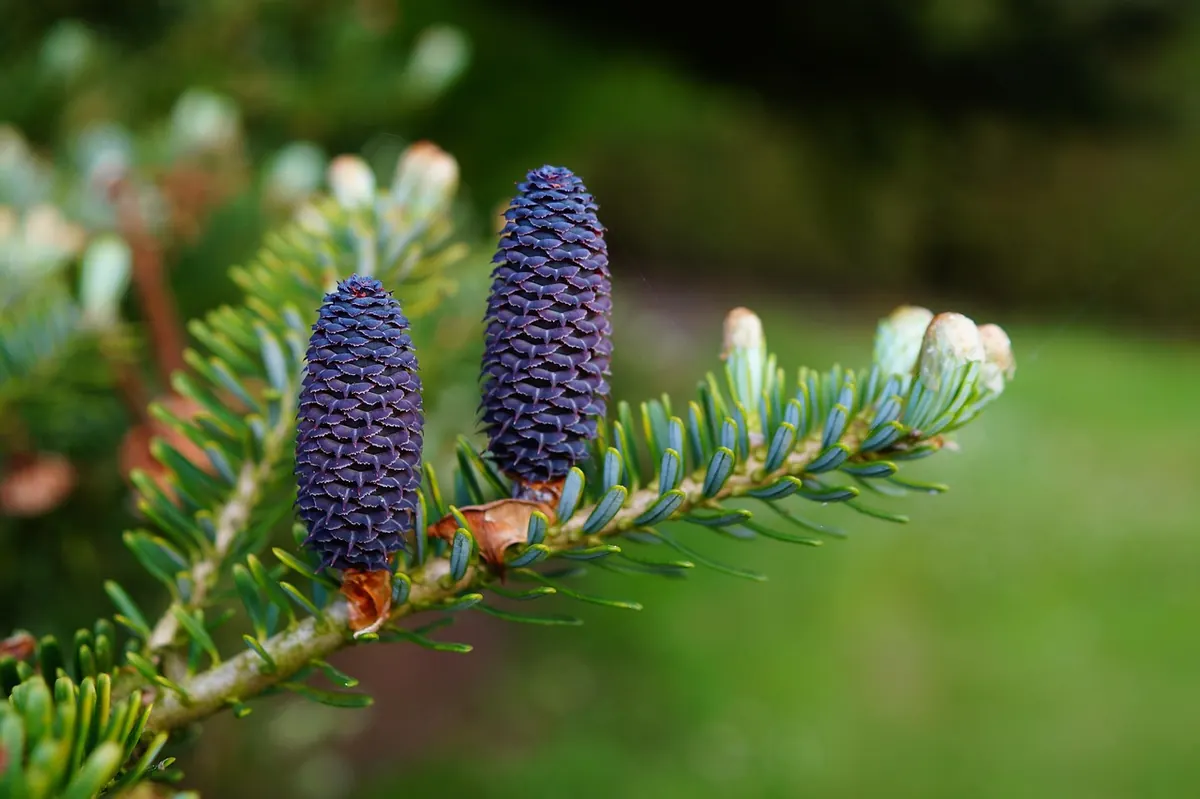
Photo: LUCA_Finardi / Pixabay